Co-regulation: A very powerful tool
Let's explore co-regulation Think about the last time a child in your class, or your own child, was really struggling. Maybe they cried, shouted, hit out or shut down completely. Sometimes, without quite [...]


Let's explore co-regulation Think about the last time a child in your class, or your own child, was really struggling. Maybe they cried, shouted, hit out or shut down completely. Sometimes, without quite [...]

Let's explore regulation Regulation is a term that is used frequently in schools and by therapists. Most frequently it’s linked to being able to self-regulate. Before I started my PhD, I thought I [...]
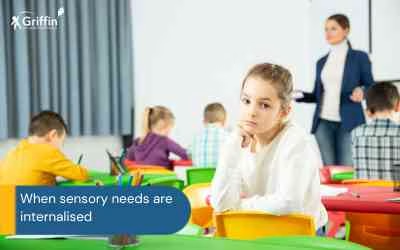
Embedding sensory strategies into classroom When I receive referrals for sensory needs, the first thing parents or teachers start to speak about are the behaviours they can see. The child who bites when [...]

Sensory solutions at school and home When you start learning about sensory processing and how it impacts children's behaviour and learning, it can feel like you've discovered the missing piece of the puzzle. [...]

Sensory circuits are not a magic bullet for schools Sensory circuits are often sold as a fix all for all sensory and self-regulation needs. The premise of a sensory circuit is outlined in [...]

How to stop hitting and biting A question that I am often asked is ‘How do I stop this child from hitting and biting others?’ It is often followed by references to behaviour [...]
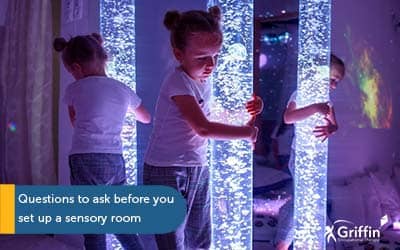
Support regulation with a sensory room You have been given the task of creating a sensory room or space in your school. It’s an exciting opportunity and you want to get it right. [...]
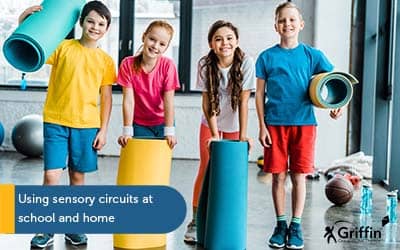
Support attention with sensory circuits Sensory circuits have evolved from sensory diets. The best way to imagine them is to think of a gym circuit, so a number of activities which are set [...]

Behaviour or communication? When I speak about sensory differences, one question that always pops up is whether children's behaviours driven by a sensory need or not. Essentially - is it sensory or behaviour? [...]

Reflections from a specialist provision Becky is a teacher who works in an autism specialist provision for autistic children in the UK. A specialist provision is a school which supports children whose learning [...]

Monitoring our progress I'm really excited to be able to share the impact of sensory processing training. This review is of my online course Sensory Processing with GriffinOT. I was able to present these [...]

Teaching interoceptive awareness Interoceptive awareness is the ability to notice the sensory information that the brain receives internally from the body. These messages come from the interoceptive receptors in our body. I explain [...]

Sensory strategies are a tool In the sensory world, there are lot of different terms and phrases. It can quickly get confusing, even for trained therapists! The terms also change over time. In [...]
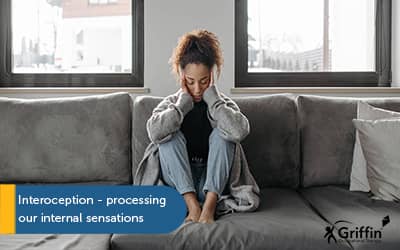
Processing internal sensations Interoception refers to the internal sensory messages that the brain receives from the body. These sensory messages come from our organs and internal receptors. They let our brain know about [...]
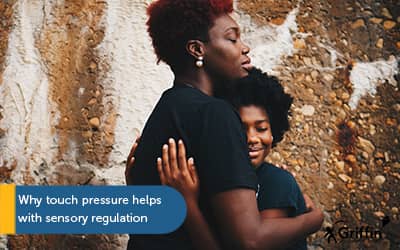
A tale of two touch pathways The terms touch pressure or deep touch pressure are used by therapists to refer to firmer touch. Therapressure brushes or surgical brushes are one way to provide [...]

Navigating through diagnosis How it feels when your child receives a diagnosis can take you by surprise. It can be a very confusing and overwhelming time. During this time there is no right [...]

A personal story - Tina and Kelly It was not until her daughter Kelly started school, that Tina noticed there was something quite different about the way she interacted with others. Kelly had [...]
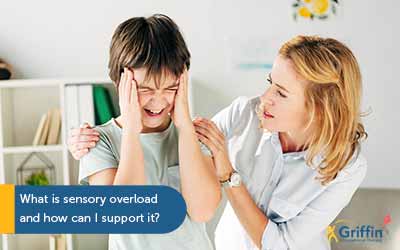
Sensory overloaded = too much information Sensory overload is a term which describes the experience an individual with sensory differences may have when they receive too much sensory information. The brain is unable [...]
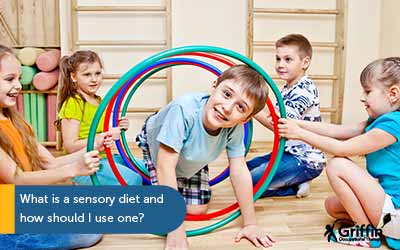
Sensory diets to support arousal Sensory diets are a structured list of sensory strategies which can be used throughout the day to help a child or adult support their arousal, attention and focus. [...]
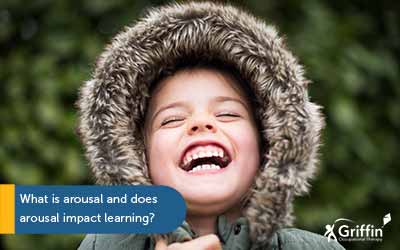
Arousal is all about alertness Arousal at its simplest is how awake or alert or how tired you are. It supports attention and focus. There are a number of things which impact our [...]
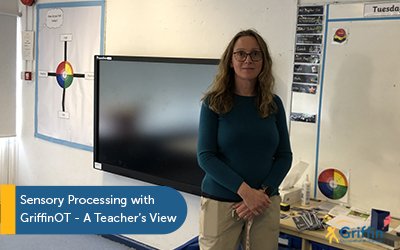
Lisa's story - Supporting Sensory at School Sensory differences are thought to occur in between 5-16% of the population. This means up to four students in a mainstream classroom may experience sensory differences. [...]
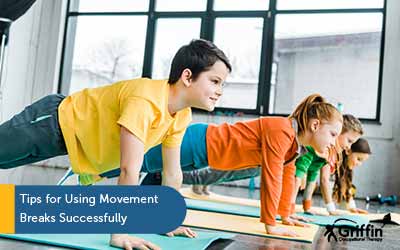
A flexible sensory strategy Movement breaks are a frequently suggested sensory tool to help students increase their attention and readiness for learning. Like all sensory strategies, they should be individualised for each student. [...]

Free sensory diet cards! Welcome to GriffinOT's sensory diet card and movement break page. Here you can download our cards for free to use at home or school. These cards are designed to [...]
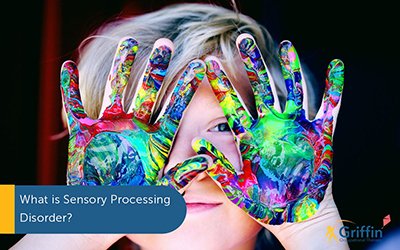
Understanding sensory processing or integration Sensory processing differences describe the experiences children (and adults) have when their brains interpret the sensory messages received from their body and the environment differently to others. They [...]
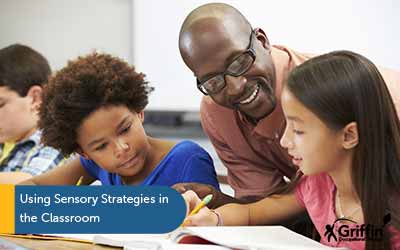
Embedding sensory strategies into classroom Occupational therapists often recommend sensory strategies, or sensory supports, to help to support children who experience sensory differences. This includes autistic children. I have already explored what sensory [...]
Dyspraxia - Let's explore how to help A question Kim is commonly asked is how to help children with dyspraxia. Dyspraxia is a term used to describe the difficulty children and adults have [...]

Ask Kim - Vestibular Stimming I wrote this article following a question from the GriffinOT community. The parent asked: “How can I stop my 9 year old autistic daughter from vestibular stimming?” The [...]
Let's explore sensory regulation Sensory regulation, self-regulation and emotional regulation are terms used by therapists when talking about children. These terms relate to the child's ability to increase and decrease their alertness, or [...]

What's the benefit of weighted blankets? Weighted blankets and other products come in all different shapes and sizes. Vests, lap pads, shoulder pads, blankets and animal shapes are all readily available for purchase. [...]
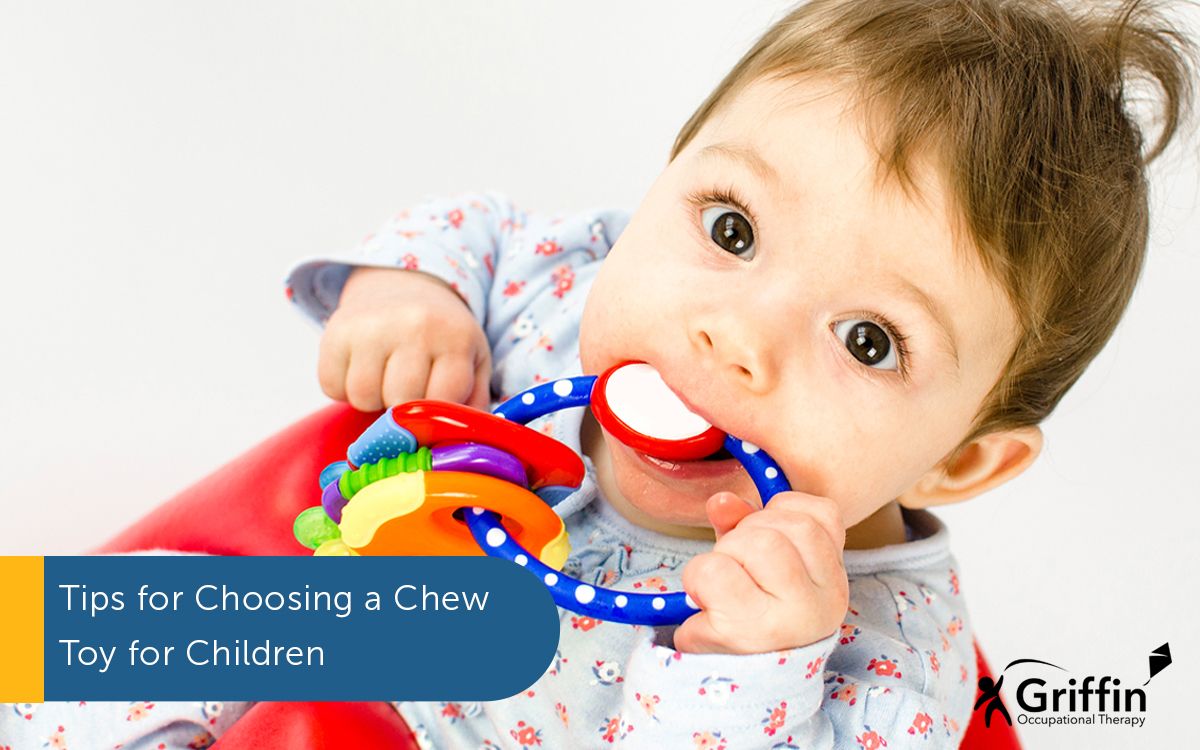
Sensory chew toys - which one to choose? Choosing sensory chew toys for children can be a daunting task. There are so many different ones available! They come in different shapes, different textures, [...]

Supporting each other at home This post has been written for parents who are homeschooling their children. Many of these will be helpful for children who don’t have any diagnosis as they relate [...]

A tale of two theories The terms 'Sensory Integration' (SI) and 'Sensory Processing' to refer to the same theory. They are sometimes used interchangeably, however there are subtle differences. This article will help [...]
Sensory processing and autism Sensory Processing Disorder (SPD) or sensory issues describes the experiences children (and adults) have when their brains interpret the sensory messages they receive differently. Their brains might find some [...]
Embedding OT supports into your classroom When I first graduated, quite some time ago now, I was frustrated at what I interpreted as a lack of support from educators in following through with [...]
Let's explore why kids chew on clothing When a parent or teacher sees their child chewing on clothing or other items it can raise questions. Some children chew on other items like toys, [...]
Let's explore oral sensory seeking Oral sensory seeking, where a child continues to put things in their mouth after the age of two, is a commonly reported behaviour for children with additional needs. [...]

The benefits of heavy work Heavy work is a commonly used term, but not everyone knows what it actually refers to! This post aims to give you a better understand of what it [...]

Dyspraxia - Let's explore the signs and symptoms The term 'dyspraxic' originates from the Green ‘dus’, bad or hard, and ‘praxis’, doing. So, the literal translation is hard to do or bad with [...]

Dyspraxia Explained - Let's explore some common myths Dyspraxia is a term that describes the sensory processing difficulty children and adults have when they struggle to plan, organise and coordinate their movements. The [...]

Let's explore noise sensitivity and overload Auditory sensitivity is sometimes also called auditory hypersensitivity or hypersensitivity to sound. Autistic individuals and those that with Sensory Processing Disorder (SPD) commonly report auditory sensitivity. This sensitivity [...]
Hearing is an essential sense! Our hearing sense, or auditory sense, is a sense everyone has typically heard of, pun intended! The sense of hearing responds to noises or sounds in the environment. [...]

Tactile defensiveness and touch sensory sensitivity Touch sensitivity is commonly reported by children or adults who experience sensory processing differences . Sensory integration trained occupational therapists would usually call this tactile sensory issue [...]

Sensory processing and the touch sense Our touch, or tactile sense, is a sense that most people are reasonably familiar with. It is one of the five senses you would have been taught [...]
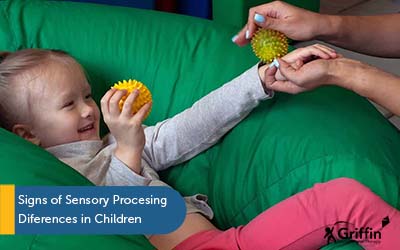
The signs of sensory processing differences In this article I describes some common signs of sensory issues. You might relate to these behaviours if you or your child experiences Sensory Processing Differences. I'll [...]
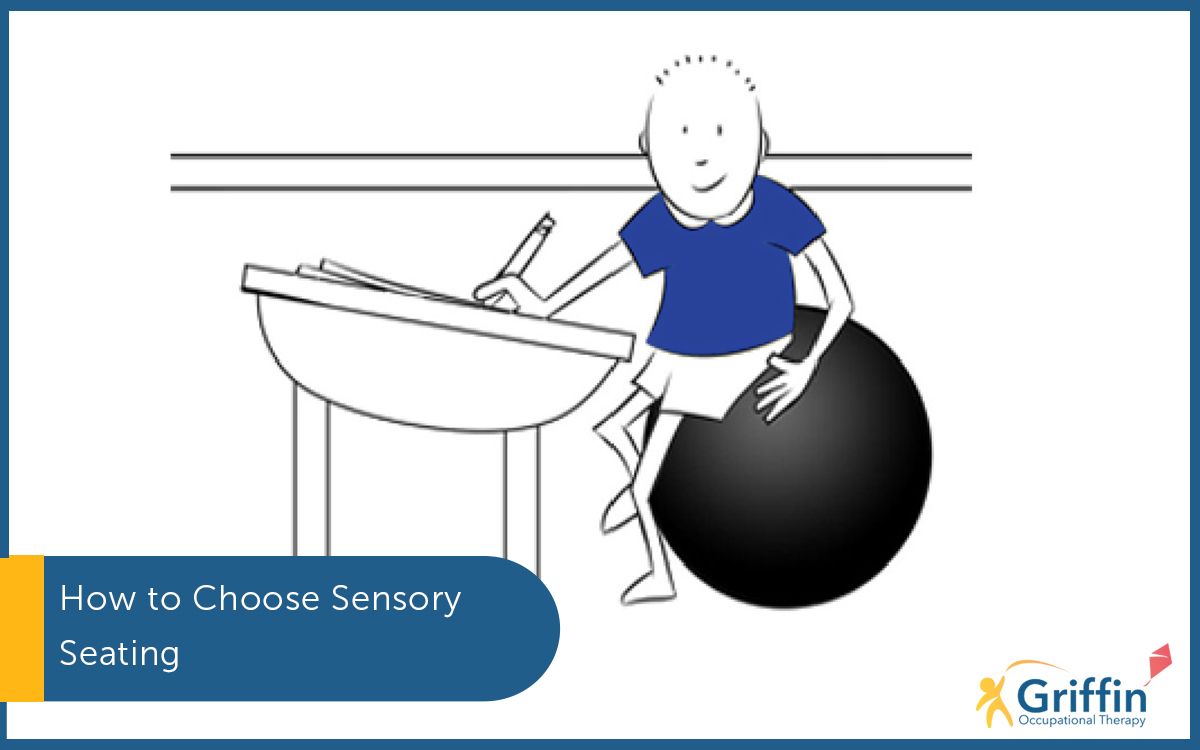
Using sensory seating in the classroom Occupational therapists sometimes suggest sensory seating for children who are constantly fidgeting in their seat. There is a wide variety of different types of alternate seating on [...]
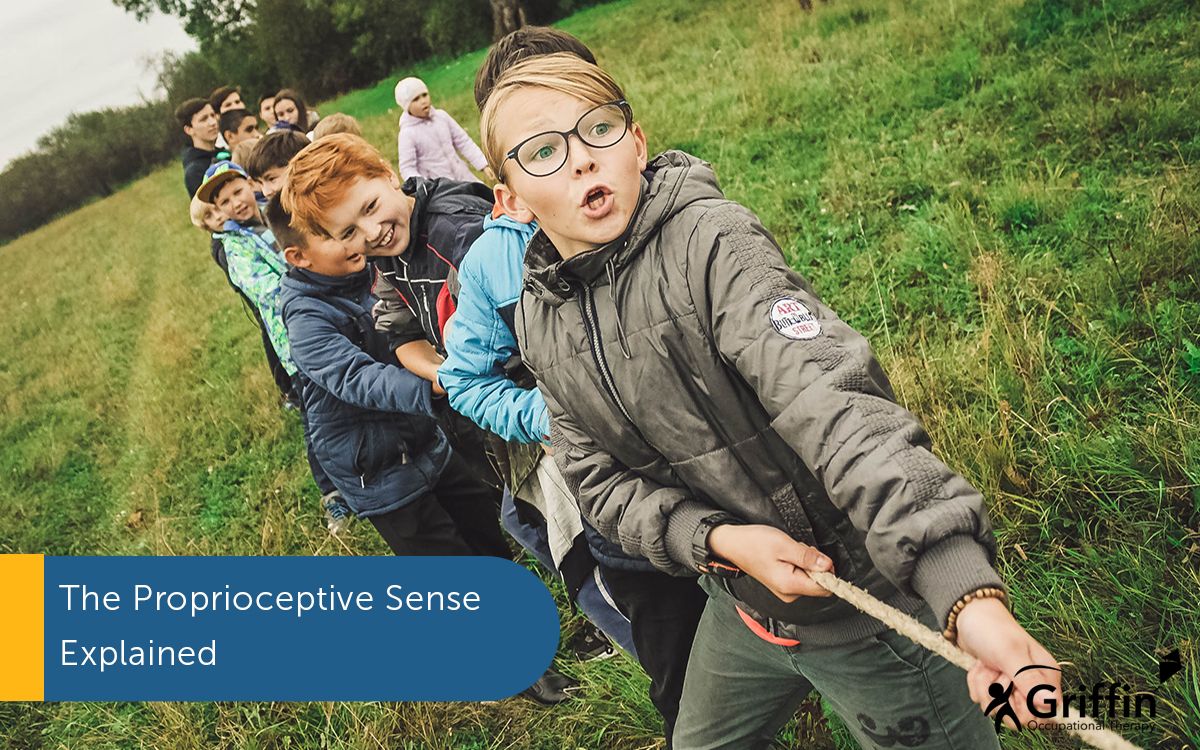
Proprioception - our sixth sense Proprioception is the awareness of how our muscles are moving. It is essential to help the brain to know where the body and limbs are in space. It [...]
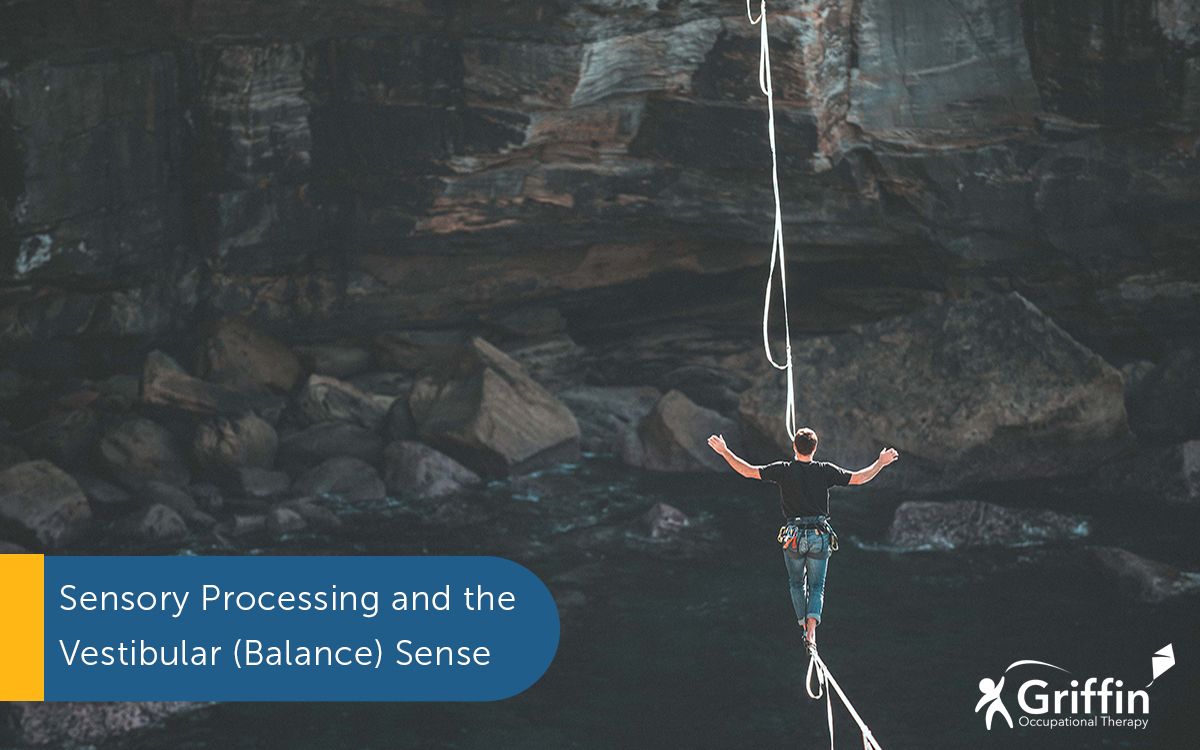
There is more to it than just balance! The vestibular sense is often described as our balance sense. However, there is so much more to the story. In this post you will discover [...]
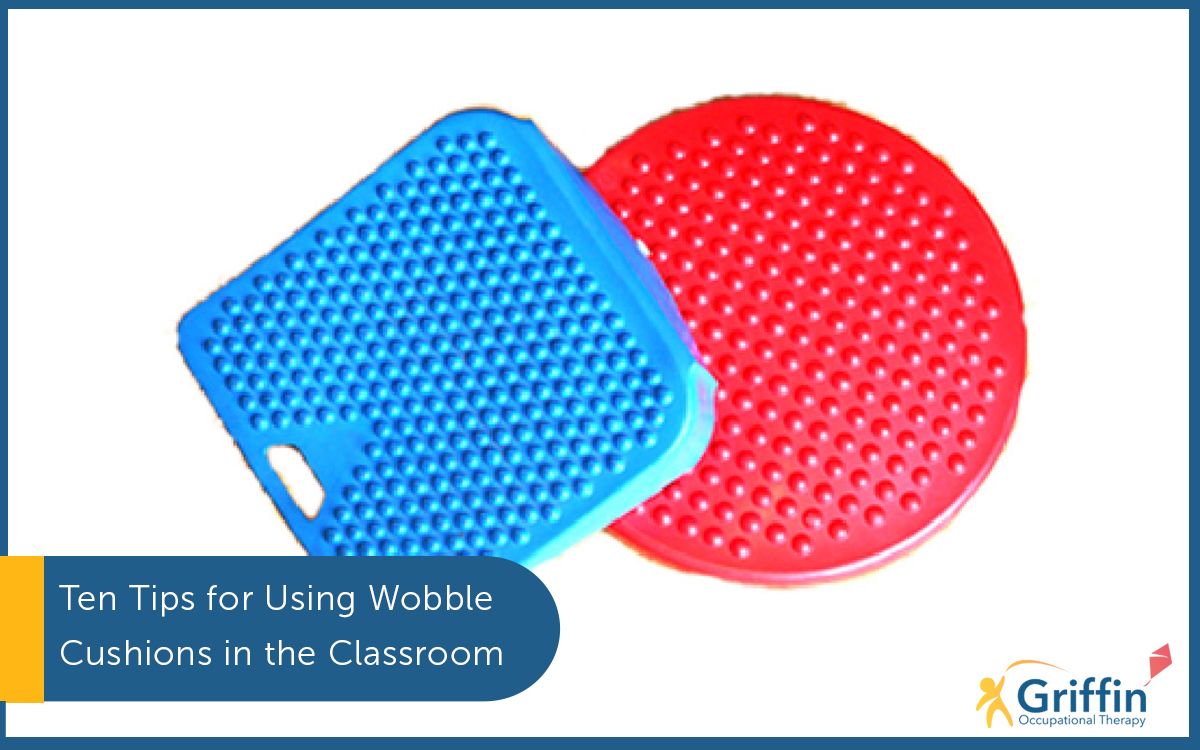
There's a wobble cushion in my classroom! You will often see wobble cushions or sensory cushions in classrooms at school. One example is the sensory wedge-shaped cushion called a Move and Sit cushion [...]

Why might you use a fidget toy in the classroom? Sensory fidget toys (also known as sensory fiddle toys) are commonly recommended by occupational therapists or tried out by teachers for children who [...]