
Sensory solutions at school and home
When you start learning about sensory processing and how it impacts children’s behaviour and learning, it can feel like you’ve discovered the missing piece of the puzzle. Suddenly, all those confusing behaviours make sense. The child who can’t sit still in their chair needs movement to help them focus. A child who covers their ears needs the noise reduced. The child who seems to melt down over nothing is simply overwhelmed by sensations. It’s tempting to think that once you understand sensory needs, you can simply add some sensory solutions, and everything will fall into place. However, unfortunately sensory solutions are not a magical fix all. This article will explore why. I’ll cover:

Sensory solutions at school and home
When you start learning about sensory processing and how it impacts children’s behaviour and learning, it can feel like you’ve discovered the missing piece of the puzzle. Suddenly, all those confusing behaviours make sense. The child who can’t sit still in their chair needs movement to help them focus. A child who covers their ears needs the noise reduced. The child who seems to melt down over nothing is simply overwhelmed by sensations. It’s tempting to think that once you understand sensory needs, you can simply add some sensory solutions, and everything will fall into place. However, unfortunately sensory solutions are not a magical fix all. This article will explore why. I’ll cover:

Sensory solutions are only part of the picture
The reality is that children’s behaviour is incredibly complex, and sensory needs are only part of the picture. Whilst understanding sensory processing is crucial for supporting many children with additional needs, sensory solutions alone cannot solve every challenge. In my work with schools and families, I’ve seen countless situations where sensory solutions were implemented with the best of intentions, yet they didn’t have the expected impact. This isn’t because sensory solutions don’t work. It’s because they can only work when the environment, task and relationship are all meeting the child’s needs.
When we see a child struggling, our natural instinct is to find a quick solution. The child fidgeting during lessons, receives a fidget toy. A child is anxious in assembly, so we let them sit at the back with ear defenders. Another child arrives at school sluggish and unfocused, so we start a morning sensory circuit. These solutions might help, but they’re essentially sticking plasters (bandaids!) if we haven’t first addressed other underlying issues.
Think about a child who becomes dysregulated every morning. Yes, they might have sensory processing differences that make them more vulnerable to overload. But consider what else might be happening. Maybe the task demands in the classroom lessons are too difficult for them. Perhaps their relationship with the teaching assistant is poor. Or they are continually distracted by sounds in the classroom.
Sensory processing differences don’t exist in isolation. They’re woven into every experience the child has throughout the day. The child’s overall needs, current arousal state and motivations all impact their ability to engage. They also sit within the environment, relationships and tasks that they are being asked to complete. These areas must be addressed as a starting point.
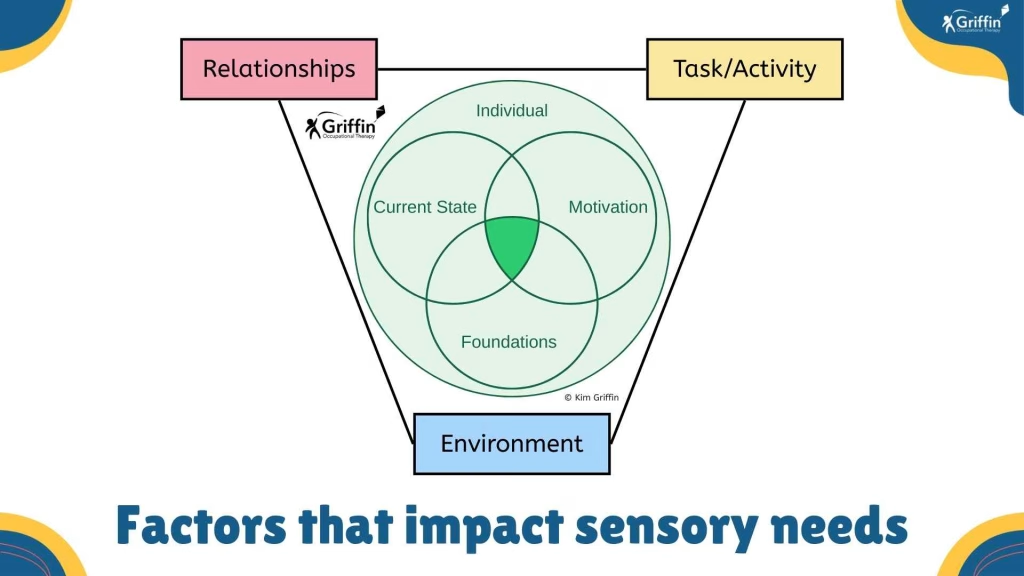
Aligning the environment with sensory solutions
One of the most important things I’ve learnt in my years as an occupational therapist is this: sensory solutions cannot compensate for an environment that is fundamentally unsuitable for the child. Imagine completing a sensory circuit in the morning designed to help a child organise their arousal and prepare for learning. Then you send them straight back into a classroom where the lights flicker, the noise is overwhelming and there’s constant unpredictable movement around them. The sensory circuit might have helped for a few minutes, but it cannot protect them from an environment that is continuously dysregulating.
This is particularly true for children who are over-responsive to sensory input. For these children, the environment is constantly triggering their stress response. It’s rather like asking someone to relax whilst sitting in a room with a fire alarm going off. No amount of deep breathing or calming activities will truly help until you turn off the alarm. For children who experience sensitivity, small environmental changes make an enormous difference. Reducing background noise, providing visual structure and creating predictable routines all help her to stay organised. These environmental supports in place first before sensory solutions are added.
The same is true for children who are under-responsive. They may need regular opportunities for movement and heavy work throughout the day. If we expect them to sit still for long periods with only a single sensory break in the morning, we’re setting them up to fail. The environment needs to accommodate movement needs, for example having a movement station that he can access when they need to or adding in whole class movement videos between lessons.
The impact of task demands
Another critical factor that’s often overlooked is whether the task itself is appropriate for the child. A child might have the perfect sensory environment and access to helpful sensory solutions, but if the task is too difficult, they’ll struggle, and if it’s too easy, they might get bored. We need think beyond the sensory demands of the task and consider the cognitive and language processing requirements, the planning and organisation needed, the physical skills involved. Does the task match the child’s ability? Is the length of time appropriate for them?
I’ve seen many situations where a child’s behaviour was attributed to sensory processing difficulties when the primary issue was that the task was not matched to their abilities. Perhaps the child couldn’t understand the language being used. Maybe they lacked the planning skills to break down the task into steps. Or possibly the task was so far below their ability level that they were bored and disengaged. This is particularly true for children with additional needs who might not have their independent activities updated regularly.

The power of relationships
Perhaps the most critical factor of all is relationships. Safe, trusting relationships with adults and peers provide the foundation for regulation. When a child feels safe with an adult, that adult can help them to co-regulate. They can notice when the child is becoming dysregulated and intervene before things escalate. They can provide reassurance, structure and support.
Conversely, when relationships are strained or when a child doesn’t feel safe, even the best sensory solutions will struggle to have an impact. A child who is anxious about an upcoming interaction with a particular member of staff, or who has had a difficult experience with a peer, will have higher arousal regardless of the sensory input they receive. Relationships create the emotional safety that allows sensory solutions to work.
Why assessment matters before sensory solutions are used
All of this brings us back to the crucial importance of proper assessment. You cannot choose the right sensory solutions without understanding the individual child’s strengths and needs, environment and task demands and their relationships. Assessment of sensory needs is important, but it isn’t just about completing a checklist of sensory behaviours. It’s about observing the child in different contexts, talking to everyone who knows them well and identifying patterns. Where does this child seem most organised? When do they become overwhelmed? What helps them to stay focused? Who helps them to feel safe? What tasks bring out their best engagement?
This kind of thorough assessment takes time, but it’s time well spent. Without it, you’re essentially guessing. You might get lucky and choose solutions that help, but you’re just as likely to choose solutions that make no difference or even make things worse. A child whose arousal is already too high might need environmental adjustments. The child whose primary challenge is with task demands doesn’t need more sensory input; they need the task adjusted. And a child who doesn’t feel safe won’t benefit from any sensory strategy until that relationship piece is addressed.
These are all things I cover in my success with sensory solutions training. We look at sensory processing patterns, but we also look at the broader context including environmental factors, task demands and relationships. There are checklists for each to build up a complete picture of the child’s needs. This thorough approach might seem more time-consuming, but it saves time in the long run because the solutions you implement actually work.
Sensory solutions have maximum impact when the environment, task and relationships are tailored and the child’s other needs are also being met. If this hasn’t occurred, they are nothing more than a sticking plaster.
Moving forward with sensory solutions
Does it mean sensory solutions aren’t worth using? Absolutely not. Sensory solutions can be incredibly powerful tools for supporting children with additional needs, but they are tools, not magic wands. They work best when they’re part of a comprehensive approach that addresses all aspects of the child’s experience. Before you implement sensory solutions, ask yourself these questions. Is the environment supportive for this child? Are the task demands appropriate? Do they have safe, trusting relationships with the adults around them? If the answer to any of these questions is no, start there. Make the environment more sensory-friendly. Adjust the task to better match the child’s abilities. Build relationships and create emotional safety. Then, and only then, add carefully chosen sensory solutions based on thorough assessment of the child’s individual sensory profile. Monitor what’s working and what isn’t and adjust and adapt as needed.
If you’d like to learn more about comprehensive sensory assessment and how to tailor solutions to individual children’s needs, check out my Success with Sensory Solutions training. Part two of the training specifically covers different sensory profiles and provides practical checklists to help you identify what each child needs. You can access this by joining GriffinOT membership, which includes access to all my training plus monthly clinics where you can ask questions about specific children you’re working with. If you’re a parent, I also offer sensory assessment which can help you to understand your own or your child’s unique sensory profile.
About the author
All articles on the GriffinOT website are written by children’s occupational therapist Kim Griffin. Kim has over 25 years’ experience supporting children with sensory and skill needs, their teachers and families. She is the author of multiple books, presents all training at GriffinOT and hosts the EBPOT podcast. Kim is currently completing her PhD, focussing on supporting children’s self-regulation in schools, at Oxford Brookes University. You can view Kim’s academic publications on her ORCID profile, or Google Scholar page.
Date last reviewed by Kim: 8th October 2026
Other Articles You Might Be Interested In